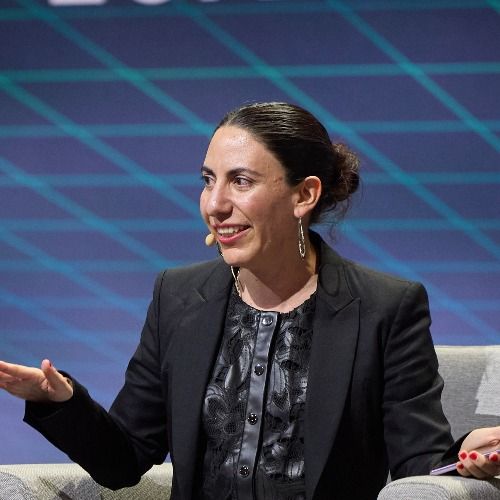
Episode 9
Founder: Think differently: be a challenger, not an excellent sheep. How data enrichment can help you stand out and remove anxiety from your customer's lives | Ken Hart, CEO and Founder at Snowdrop Solutions
Today I speak with Ken Hart, CEO and Founder at Snowdrop Solutions, a data enrichment FinTech. We talk about the importance of clarity and transparency of transactions in financial services, focusing on solving every day problems, the need for a user-centric approach using personalized spending insights and recommendations, the benefits of autonomy in building a company to have a meaningful impact on users' lives and the importance of creating a culture that builds challengers, not excellent sheep
"There's moments in people's lives where there's a lack of clarity, a lack of transparency, and if you could just make sense of it quickly and intuitively... people just get it."
Let’s dive into it!
👉 You can find Ken here
- LinkedIn: https://www.linkedin.com/in/kenhart/
- LinkedIn Snowdrop: https://www.linkedin.com/company/snowdropsolutions/
- Website Snowdrop: https://snowdropsolutions.co.uk/
👉 And you can find Monica here:
- LinkedIn: https://www.linkedin.com/in/monicamillares/
- TikTok: https://www.tiktok.com/@moni_millares
- YouTube: https://www.youtube.com/@moni_millares
- Website: https://moni-millares.mystrikingly.com/
If you enjoy this pod, please follow and leave a 5 star rating on Spotify and a review on Apple podcasts
🗞️ Newsletter: https://www.linkedin.com/build-relation/newsletter-follow?entityUrn=7062789745407340544
📞 Schedule a free “Open Office” call with Monica: https://www.kalendme.com/en/fintechwithmoni-ejoob
In this Purpose Driven FinTech episode we cover:
(0:00:00) Financial stress in the UK: 40% of users struggle financially
(0:00:34) Snowdrop's goal: Provide clarity on spending and transactions
(0:01:52) Solving daily problems for consumers
(0:03:39) Ken's definition of success
(0:04:42) Ken's productivity habits: Walk and talk, and focused music
(0:07:00) Motivation behind starting Snowdrop: Autonomy and long-term vision
(0:11:23) Snowdrop's expertise: Providing clarity and intuitive user experience.
(0:13:09) Use case in financial services: Enhancing transaction clarity and reducing anxiety.
(0:22:52) Snowdrop's vision for the future: Spending insights and ESG tagging.
(0:26:35) How has autonomy helped Snowdrop build the product that they wanted to build?
(0:29:15) Defining what to build and not to build. Becoming a day to day product
(0:32:29) Career advice for kids getting ready for the university
(0:34:03) Choosing meaningful work over society expectations
(0:36:25) Leadership and culture at Snowdrop, why attitude matters
(0:38:15) Building a culture of challengers, not excellent sheep
(0:39:27) The one thing Ken would change in FinTech: Thinking about customer experience
(0:42:09) Where to find Ken and the team
SEARCH QUESTIONS
- What is data enrichment in FinTech?
- What are toothbrush products in product management?
- How to build everyday use FinTech products?
- How to create clarity in financial transactions?
- What does it mean to be a challenger not an excellent sheep?
- How to build a profitable FinTech without VC funding?
- What is transaction enrichment and why does it matter?
- How to focus on solving everyday customer problems?
- How to say no strategically in product development?
- What is the importance of autonomy in building companies?
- How to create user-centric financial services?
- How to prioritize product features by saying no?
- What is the role of transparency in financial services?
- How to build personalized spending insights?
- How to connect dots in product strategy?
- What are the benefits of bootstrapping a FinTech?
- How to focus on core competencies in FinTech?
- How to improve merchant name clarity in banking?
- What is the walk and talk productivity method?
- How to think differently in competitive FinTech markets?
—
Production and marketing by Monica Millares. For inquiries about supporting or sponsoring the podcast, collabs or guest appearances email Monica at fintechwithmoni@gmail.com
Disclaimer: This episode does not constitute professional nor financial advice and does not represent the opinion nor views of my current, past or future employers. The guest has agreed to record and release our conversation for the use of this podcast and promotion in social media.
Transcript
Ken Hart (Snowdrop): Monica. It's a real pleasure to be
you and I had a chat at Money:Focusing on what you call the toothbrush products, which I love. So it's a very unique conversation. So really looking forward to it.
Ken Hart (Snowdrop): Thanks. Thanks. So maybe a bit of context because I'm not a dentist and we don't sell dental floss and toothpaste. So snowdrop spin around a little bit about the company.
ps and develop around Google [:And then what we're trying to do is really focus on like a B two, B2C approach, and we would give. The best location, intelligence, location, and rich data to say a large real estate company so they can make it more clear and intuitive with people go to a website, figure out a real estate portal, where should I live?
Why the toothbrush metaphor? Because what we did was we really try and do things. When you're dealing with the consumers young, old, male, female, you want to deal with problems that people have every day. We call it like a toothbrush, right? Hopefully everyone listening to this podcast brushes their teeth every day, right?
Yeah. So it's not just a small amount of people once in a while. We're trying to tackle problems that are daily problems for the mass of consumers. That's hence the term a toothbrush
at is a very good. Even like [:And then it's, I think we can have like very interesting conversations, but before we go into the detail of it, just for everyone to get a feel of who you are and learn a little bit about your mindset, I'll just ask you a few questions on Ken as such. So let's start with what is your definition of success?
Ken Hart (Snowdrop): Frankly, it's a good balance with my family, and I have four daughters, and they're getting increasingly getting old. They're getting ready to go off some of them to university. I really say it's success is having something that good balance and join people you work with. Obviously, when you do something that's impactful, you want to have a degree of autonomy.
ike that, but then you'd hit [:That's great. But it's not my definition of success. It's really enjoying the people you work with and having a time to have that balanced life. Yes,
Monica Millares: yes. I agree with you because the people that you work with make a massive difference. We work like most of the day, right? So yeah, definitely. And then of course you are founder, CEO, you run this company for many years.
What's your biggest productivity habit?
Ken Hart (Snowdrop): Ooh. I will say there's two things that at least they work really well for me. One is what I call the walk and talk. And by the way, this is a productivity hack, but I would argue a good relationship hack. Yeah. Or good friends and family hack, whatever you want to apply to.
e not sure what's going on a [:We have the offices. Right here, beautiful parks in London. We'll go for a walk and a talk and say, Hey, what were you thinking? What happened then? That's, a big one for me. The second one is sometimes there's times you just focus get into the phone, get things done and I find listening to music, certain types of music is really good and enables me to really zoom in on what I need to get done and, produce things well.
So those are my two bits. Yes,
Monica Millares: I like that. It's focus and then basically have the difficult conversations in a safe, relaxed environment that it's walking. It's not a confrontational. It's a
o walking. I've never heard. [:Or you're worried. Maybe they're upset or something or. Or you're a walk and a talk is always a good thing.
Monica Millares: Cool. I like that. I used to have a manager back in the UK that exactly at some point we would be like, Hey, we have meetings. And it was like, shall we go for a walk? It's I can bring my notebook and take notes as we walk, which was cool.
Okay. So then the last one, before we go fully on into the episode, what is the favorite, your most favorite part of the work that you do?
Ken Hart (Snowdrop): The favorite part of the work that I do. I think I like connecting with people and connecting the dots. So I enjoy what I do because I'll have a client meeting.
? What do you want to do? Is [:Or you've read something else and I like connecting the dots. That's really something that I genuinely enjoy doing. I'd like to think I'm okay at it or even better than okay at it. And it also enables me to think about what are the next things to come? So that's probably the thing that I enjoy most about what I do.
You got to have the time, the team And the sort of stability though, to do that, because if not often we're all in just heads down do, fight a fire here, put out a fire there. So having the time and the ability to step back and connect the dots is something I definitely enjoyed.
Monica Millares: Awesome. I like that. And it's connecting the dots and connecting with people, basically. Yeah,
Ken Hart (Snowdrop): yeah, definitely.
t to start with the purpose, [:Ken Hart (Snowdrop): Remember I talked about autonomy. Let me give you a bit of a story from 2006 or 2007. I was at Yahoo. So I'd worked for some really big companies in my time. And me and two or three others were brought into a very I'm going to be talking about a very important meeting with a senior person running Yahoo Europe.
And that person was looking at their BlackBerry at the time and said, what is this whole iPhone app thing? I don't get it. And we're all sitting around explaining to the person right now this is a new format. It's a new user experience and people are used to using their BlackBerry to type just email, but an app is really a much more engaging way to.
deal with content, not just [:To which the exec said I won't be here in 2 years, so let's shut down the mobile business. So that experience was a really painful experience, but it opened my eyes to how big companies often think often very short term. This quarter next quarter end of the year, and not really a lot of thought beyond that.
e. And it's what am I afraid [:But what I've loved about the experience, what prompted me to create Snowdrop was. To do something with a group of people that I truly enjoyed and having a bit of that long term ability to carry something through. Not because VC is telling me to do it or some guy in corporate headquarters in California needs to do it right to do the right thing the right way.
The right time. You need to have autonomy to do it. And that was why I wanted to create a company. Why did we pick Snowdrop? And why did we pick the field that we work in as a second answer your question? And, something that I thought was really compelling when I was a little kid, this great story of Dr.
, was:We can't do anything. Oh, and a doctor who lived in London at the time, young doctor, Dr. John snow said, and he sat there one night and he drew up a little map of the neighborhood and he drew a little black line where all the dead people lived and they said, where's the local source of water? And he drew that and it happened to be right in the middle.
And then he immediately ran to, I think it was a local priest and they said, Oh, my goodness. And they disconnected the pump from the well to end the epidemic. This is before microscopes. This is before they understood what bacteria was. So what I loved about that story and why we call the company Snowdrop after Dr.
experience and give clarity [:John Snow, who's buried in the old Brompton Cemetery now in London, and that's a little long winded story about why create a company, why we call it
Monica Millares: Snowdrop. Yeah, and I think we can go deeper into both. But I'll start with the Snowdrop as such. I love, the inspiration of the name. Can you explain to us, what exactly do you do as a company when it comes to providing maps?
And how does that relate to customers and Proper practical interfaces like what did you guys do?
Ken Hart (Snowdrop): Sure. Sure. So what we do is we have a lot of mapping expertise and location expertise and we believe that there's moments in the consumer's lives. Like, where should I buy this apartment? Where should I live?
What does that look like? Or [:People don't need to overthink things. They know exactly. Oh, that's a six minute walk from that hotel. To the British museum. Great. I'll book it now. Or, oh, that's where I went for lunch last week. I recognize that transaction. That's the clean name. That's the logo. I'm not freaking out thinking about I've been hacked.
There are all these moments that we try and focus on where we use Location enhanced data enrichment to really create that clarity and that intuitive user experience. That's our mission out there. That's our North Star. Obviously, that works in real estate, travel, financial services around payments and transactions and figuring out where I should go on holidays or booking a hotel.
[:Monica Millares: Thank you. Can you expand on financial services as such? What are the use cases? Because I think some of the apps, let's say in the big fintech, new banks you have your trends, you go into the app and then you see the transaction.
Some of them do display a map. Others don't display a map. What's the use case for a fintech?
Ken Hart (Snowdrop): It's funny, Monica, when we started doing this, gosh, I want to say five, six years ago, I went to a couple of meetings in old street part of East London. And I met a company and I went, it was almost like a used pet shop.
is company. That the time is [:In fact, we want to be so good that we never have to invest in a call center. And I said, what do you mean? I said, yeah, people don't understand their transactions. We're going to do it differently. We want to be a mobile only bank. That are really transparent, a great user experience. Mondo, for those who are not sure or never heard of Mondo, went on to change their name to Monzo.
And really, we gave them the Google Maps and helped them out and build that initial transaction enrichment. Tookoff. Starling called us right afterwards. Ann Bonham said, I'd like that too. Then Moniz, et cetera, et cetera. And what we saw, there was a gap between these Challenger banks who are out there really trying to differentiate and do things in a brand new way and the more traditional banks.
pretty, it's not meaningful, [:Oh, they can't be bothered. So what we're seeing is that your traditional bank, there's about a year to gap between the challenge for banks. We're watching this, by the way, not just in the UK. Banks like N26 in Germany or Rebellion in Spain, Nikkel in France. And then finally, the more traditional banks were like, you know what?
This is starting to eat into our business. You're taking away some very valuable users that if they migrate from traditional bank to these new banks, we're going to lose a lot of lifetime value of these customers when they, get better jobs and start applying for mortgages. They won't be turning to us to traditional bank.
cetera. The one thing that I [:I think it's called Oxford. Maybe reporting or Oxford business reports. Anyway, they asked a bunch of people around the world. Where do you see the use of location and maps in the UK? It was the second most popular answer was to clean up banking transactions. So it's one from this very niche little thing a couple of years ago.
Only challenger bank turning road to like mainstream people expect this now. Sorry, my phone going off there. That's fine. Yeah,
Monica Millares: that I couldn't expect that when you go, especially someone like Google, like, when Google goes and asks consumers, where could you like to see basically location and rich data that consumers come back and say in my banking
Ken Hart (Snowdrop): transactions, it should be there now.
d but that's a big shift and [:Increases app ratings, handset at bank went from three point 4. 3 to 4. 6 overnight by launching some of this enriched data services. So there's some real business benefits to frankly, giving your consumers a good experience.
Monica Millares: Yes, that is very good to hear because if you were to ask me in a very critical manner, Hey, Monica, the map in the app, I got to be like, that's a vitamin, not a painkiller, but actually.
before, it's we are removing [:Ken Hart (Snowdrop): Yeah, just think about in the UK about 11% of all transactions take place outside of the UK in Luxembourg, it's 43%.
Now, I don't know Qala, Lumpur, Singapore, but you would imagine a large number of those transactions are not in the domestic market, and a lot of those transactions are. I don't know the merchant. I don't remember where I was. I don't recognize those brands. I'm changing my spending habits. Maybe it's a different currency as well.
where that transaction took [:It's a real reading point.
Monica Millares: It is because then it's not just the map. It is like you said, the name, right? It's like the name, the map from memory. You also offer it like the logos. So it helps me remember. What did I do with that transaction or identify, transactions that I'm like, Oh, I don't remember if I did that.
It happened to me recently that I was, traveling went to Amsterdam and I came back and I was like, I had a Malaysian domestic transaction a few days after. And I'm like, I don't, I generally don't remember what I did. That's it. It's yeah, but then it's it's, yeah the, and you, in this, in my case, the amount was very low.
t comes to my mind is I have [:Attempt that it's we do the first one, it goes through and then A few weeks later, we do a bigger one. So that's, what goes through my mind as a product person, maybe not as a consumer.
Ken Hart (Snowdrop): And that's literally what goes through your mind as a consumer as well. And if you think about, typical example, I once my wife took the kids out for an Italian restaurant and it came back in the statement grow Mecca.
She was like, Oh my God, I've never been to grow Mecca in my life. I've been hacked grow Mecca. Is the name of the company that owns the franchise for the mama mia pizza chain, where we happen to be. So it's Inditex is the corporate entity, Zara, Wysh they're Massimo Dutti, et cetera, maybe the brand.
that anxiety. It's not just [:Or would not have helped my wife and that's in that case. So categorization alone, it's nice, but you really need the whole solution of location enhanced. We believe transaction rich to make sense of it all. And then you can also do spending insights. Here's where Brits go when they go travel abroad, or here's where.
People go when they go to Kuala Lumpur, or whatever it may be. You can do a lot more when you have that level of detail.
Monica Millares: Yes. And then just like brainstorming, putting these out there, like right now, of course, across the world, we're all a little bit tight when it comes to money, like the cost of living, it's just like going to the roof.
y yeah, maybe in the past we [:Oh, yeah. Now I know that helps to our peace of mind because financial stress is a real thing.
Ken Hart (Snowdrop): It definitely is. I think if I remember the statistics in the 4 is something like in the UK, 40 percent of users. Just make it to the end of the month, right? They don't have an extra savings at the end of each month.
That's a lot of people that really are pressed financially and with high inflation, high energy bills, it's a problem. If we can give some people more clarity and how they're spending, and then in time, we can work with the banks to recommend spend money here, not here. Maybe there's a reward here.
And you could [:You may want to shift your spend a little bit over here. So there's a lot of things you could do once you have that clarity of transactions, a lot of insights and a lot of nudging that you can do to your consumers afterwards.
Monica Millares: I like that because now you're just exactly you had your core proposition and then now it's okay we've nailed the corporate position.
Now, let's see, how is it that we can collaborate with the banks fintechs to come up with. Ideas on how we can not enrich the data, but enrich customers experience such that they have. Better relationship with money better habits as such.
are doing a great job of it, [:If I said today, you're going to grab an uber to go from point A to point B, you would expect to be able to see that car showing up an estimated time in a while to pick you up, right? That experience. Is the standard expected experience now, right? That's a great example of if you're going to be traveling in the future, you want to get rewards and loyalty programs where you're going.
You want to get recommendations where to stay. There's a lot of things that banks can do to really enhance the user experience rather than just, try and Give just a logo or something like that the other thing that I just would mention briefly monica is a lot of banks still have what I would say a do it yourself mentality.
ips with visa and google and [:So we've had customers that instead of trying to build this stuff all themselves from scratch, they've actually implemented in a weekend. And that covers 200 million points of interest in the world. Millions of logos, 95 percent accuracy rates. Yes, some banks will always have a default. I'll build everything myself.
That's also something that could be best applied or learn from elsewhere. You don't need to build everything yourself, right? You can really take something off the shelf. That's really good and proven rather than try and manage logos or manage Sure.
nage our names and our logos [:So the, how it helps you achieve your mission to help people with their financial services is basically. If I work with someone like you, then I can ensure that part of the process is sorted while I use the rest of my resources to focus on my core functionality. That it's, Hey, how do we help customers have better.
Financial lives, basically.
Ken Hart (Snowdrop): Yeah, very much so I'll give you an example of a very large bank in Southern Europe to try to build this themselves. They spend millions of dollars on software licenses and they have about a 75% match rate, right? That means one out of every four transactions they get wrong and they're spending literal.
can't get the stuff off the [:Monica Millares: Yeah, I agree. Yeah, because it's not the core functionality. I'm talking about mindset. I want to expand on product mindset as such and what you talked about autonomy. So how has autonomy helped you build the product that you wanted to build?
Ken Hart (Snowdrop): It's a good question. I have a couple of stories coming to mind.
I'm not sure I can share them all, but, look we've been an independent company for 10 years since our inception. No VCs, no private equity, nothing of that. And we've been profitable. All that time through thick and thin, we've always managed to accrue a little bit of retained urns.
tonomy, you can do things to [:And it's not because the technology isn't good. The technology is constantly improving and getting an improvement in leaps and bounds. It's just the banking sector is a slow moving sector in general. And so if you're not able to do something over a long period of time, like 3 or 4 years.
You're not often going to be given that opportunity under short term pressures. Again, think of the story when I was a Yahoo, right? If I don't, I'm not going to be here in 2 years. What's the point? The other thing is realistic expectations. Before I created the company, I went to another company and we had to go from 0 to 10 million.
ndred million in three years [:It's not necessarily the best thing for your company or your product proposition or your team. Right so it's getting that balance long term autonomy table to do the right thing in a realistic period of time. So that's been really important. And then it's. Getting the right people who can really think very clearly, is this the thing that's going to move the needle?
problem. The last thing I'll [:Monica's zippers. Yeah. I often say the problem is right between your legs and people go, what? I'm like, look down at your pants or your jacket. There's a Japanese company called YKK. They make zippers. That's all they do, but they're really, good at it, right? They don't make clothing, they make zippers.
So if you're a clothing manufacturer, you'll probably use YKK zippers as part of the thing. So I believe in the FinTech space or financial services space, there's a role for these very specialized, dedicated companies that just do one or two things really, well.
Monica Millares: Yes, and I have a follow up question to that because it seems easy, but it's difficult, right?
llenge to a management team, [:Ken Hart (Snowdrop): I can only tell you what we've done and I'm sorry. I can't I don't know if this is a advice that's applicable elsewhere, but I would start by saying no. 1st thing is think of a big block of marble. And if you're going to be Michelangelo, you're going to be creating David out of that. The first thing you'd be doing with your ham and chisels thing.
No, no knocking things off. Not us, not our core expertise, not adjustable for us. And then you're going to get to start to see a shape. And then 2 or 3 people around a table, because it's not a committee here. It's 2 or 3 people. They're going to say, okay, that's, this is now going to take a shape.
d do too many things. Or too [:Monica Millares: Yeah, I like that. And that comes back to your productivity habit of focusing
Ken Hart (Snowdrop): or combine that with walk and talks.
But what I've had is I've been fortunate to work with people that I've known for 30 years. We have some great people in the company. Directly in the company where advisors and there's a couple of moments where you need to be challenged product, leadership, finance, whatever. And a lot of those conversations like, no, we're not going to do that.
Here's why. And it really makes you sharpen your argument. Like I said, that hammer and chisel knocking things off is a very useful way to start.
at product leaders, product [:It's more of a strategically. We are not that we're not positioned to be the best here. We it's defining who you are not to define who you are. It's getting philosophical, but yeah.
Ken Hart (Snowdrop): My, my kids are getting ready for university. And part of the thing that I would say is the experiences is hard.
There's so many choices, so many things you could do, and it's very competitive out there. So my 1st advice to any parent or any child is preparing to go to further their education is figure out not what you want to do. Figure out what you don't want to do. Start by saying no. Like I said to my daughter.
in terms of, your passion in [:It's better than to be good at 1 or 2 things. That's a small market. That you can really carve out and do that incredibly well than to come to be number 8 or 9, in a huge market, in my opinion, it's harder to be the leader in something small than not really an important player in a bigger overall market.
Monica Millares: Yeah, that, that's good, advice for anyone thinking of life changes, career changes, getting into UNA or because like many people now in their late twenties, late thirties, mid forties, they're like, I want to change. A lot of people are going through what I call either the quarter of a life crisis or the midlife crisis.
And then the process is similar, right? Yeah. Defining who you want to be next.
lement of you do what you're [:I don't know when that point is. Maybe often traditionally, it's in your little later on, not your early 20s or mid 20s, but a little later on. We're like I've achieved this. Now I'm going to do something that's more meaningful to me. And the advice that I would have to anyone, let's say early 20s to early 30s.
Yeah. Isn't really to worry too much about what they make it's, or, even, their title or anything like that. It's about, are you learning? Are you really excluding things in your life? By the way, it said the same thing about dating people. If that person's not for you move on.
hen use later on in life? So [:Monica Millares: Yeah, at the same time. Yes, I love the exactly move on. But at the same time, I would say for anyone listening. Listening, don't move on like too fast, like genuinely sit down and be like, Hey, is this, me being emotional and I'm like, Oh, I don't want to deal with these or just sometimes you just have to push through and be resilient and it's learn, then move on.
It's different approaches, right?
Ken Hart (Snowdrop): Yeah. Don't just change for the change sake, figure out why what's missing, why this is not for you and gravitate for what you really do want instead.
like complex and difficult, [:And the most beautiful part as well is people. So people sometimes it's, hard to bring the best out of people when we have a lot of pressure. How did you do that? What's your leadership style such that you bring the best out of people? You keep them in a high performance. Place and do it in the long term, right?
Because otherwise it's easy to get into. I'm done. I'm burnout. Bye. Bye.
Ken Hart (Snowdrop): That's a hard question. It's a good question. I don't know if I have any secrets to share. I can, only just say we try and create a culture. So how do people work together? There's processes and stuff like that. But I think what's more important anytime when we interview people, both from the candidate looking to join Snowdrop and for us looking to hire them.
he question we have for that [:Everyone has the right to be what we call a challenger. I'm not sure I agree. What about this? And come with an alternative, ideally. Do it in a respectful way, right? So we try and not fire what I would describe as excellent sheep. I want people who can challenge and say, no, let's do it this way instead, right?
So being the brightest person in the room or the best in academics or having so many titles, I'd rather people have more scars than medals. If that makes sense, and maybe that's because, in Spain, where I spent a lot of time, it's something called titulitis. We're like, look at all my medals.
r for people who screwed up, [:And then support each other. We're not a big company, right? We're roughly 30 people or so. So it's relatively easy to do something at a company of that size. I think if you're a company that's growing very quickly, you have to also be careful not to hire too many people that you're, that impacts the overall culture.
That's something that we're extremely careful about. We'll pause after a month or after two, three months of someone joining and be like, is this person really the right fit? Yes, I really like that. You have to be pretty brutal. I guess is the word sometimes about that. It doesn't always work out.
n you are the most qualified [:Ken Hart (Snowdrop): Oh, gosh, just one thing. That's a hard one. Monica. Nothing. I
Monica Millares: know. I know. It's the most. 1
Ken Hart (Snowdrop): thing I would change is to really think about the consumer experience. People, are like, oh, we don't want to onboard another vendor or procurement process takes us time, or we're going to build it ourselves.
of some of these. Challenger [:And that really makes a difference. If there's one thing I would suggest is because there's so much inertia in what we do people don't change their banks that frequently that maybe you don't need to think about the consumer experience that much. But that would be something that I would really advocate that people think about.
Think about the long term value of a customer that you captured 18 and getting them all the way through to their 88, right? Think about their different stages in life and thinking about making sure they have a great experience with you because making great experience often they don't go together, right?
to inject a little bit about [:Genuinely across fintechs and the banks across the industry that requires a mindset shift and a culture shift. It's not just a process shift. But yeah, I think we could have more impact.
Ken Hart (Snowdrop): There's, I'm not the 1st person I said, I won't be the last, but we're still the early, early, early days of all this.
So we have a long. road ahead of us, a lot of ups and downs, a lot of change. Stay tuned. That's what I can say. This is going, it's going to be accelerating over the next couple of years. And think about what people really want. Oh I need a PFM. No one needs a personal finance manager.
them manage their lives more [:Help them over those different stages of their life. Don't just tick a box. That would be my suggestion.
Monica Millares: That's a beautiful message to end. Where can we find you on Snowdrop?
Ken Hart (Snowdrop): You can always find us at snowdropsolutions. co. uk. Big presence on LinkedIn and I'll be traveling around coming to a, an event.
I hope near you, but always keen to reach out. And we'll be doing a couple of things with Google and Visa over the next couple of months. Hope to bump into you again soon.
Monica Millares: Cool. Awesome. Thank you, Ken. Thank you, everyone. See you next week.
Ken Hart (Snowdrop): A real pleasure. Thank you for having
Monica Millares: me. Likewise. Thank you, Ken.