Episode 19
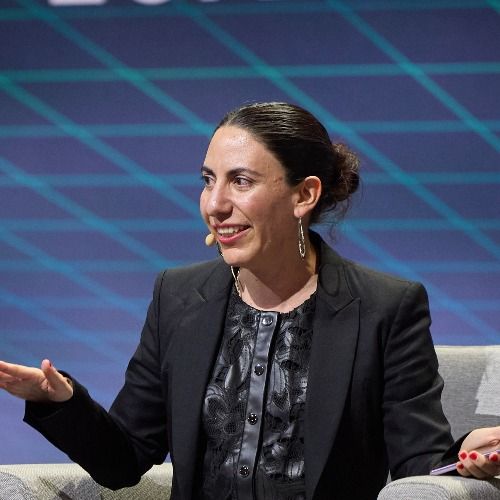
Expert. The Role of Open Banking and Open Data in Fostering Financial Inclusion | Lauren Jones, Director Market Development at Open Banking Exchange
Today I speak with Lauren Jones, Director of Market Development at Open Banking Exchange. Lauren is an expert focused on delivering open banking and open finance to central banks, regulators and market infrastructures around the world.
Open Banking Exchange aims to foster innovation, competition and efficiency to increase consumer choice and enhance security for online payments and is globally known for guiding central banks, authorities and regional communities through operational and technical set-up of open banking and open finance ecosystems.
Lauren explains open banking, open data, and open finance in a simple to understand manner and we discussed how Open banking and open finance are a journey - more specifically a journey setting foundations for future innovation. We touch of the role of the regulator, competition, the actual benefits of open banking, and how it fosters financial inclusion.
If you enjoy this episode it would mean the world if you subscribe and give it a follow so that we can have more impact. Remember to connect in YouTube or LinkedIn to keep the conversation going.
Let’s dive into it!
👉 You can find Lauren here
- LinkedIn: https://www.linkedin.com/in/lauren-jones-payments/
- LinkedIn Open Banking Exchange: https://www.linkedin.com/company/open-banking-exchange/
- Website: https://www.openbanking.exchange/
👉 And you can find Monica here:
- LinkedIn: https://www.linkedin.com/in/monicamillares/
- YouTube: https://www.youtube.com/@moni_millares
- TikTok: https://www.tiktok.com/@moni_millares
- Website: https://moni-millares.mystrikingly.com/
If you enjoy this Purpose Driven FinTech episode it would mean the world if you subscribe and give it a follow so that we can have more impact. Remember to connect in YouTube or LinkedIn to keep the conversation going.
In this Purpose Driven FinTech episode we cover:
(0:00:00) Financial inclusion vs. financial access
(0:02:33) Resilience and overcoming challenges
(0:03:40) Viewing failure as a learning opportunity
(0:06:13) Taking initiative and upskilling in career
(0:07:28) Building purpose-driven fintechs with a public good element
(0:08:06) Investing time in understanding and future-proofing fintech
(0:10:09) Developing an industry strategy for the future
(0:10:59) Regulators in the UK and Europe lack a clear vision for the fintech agenda
(0:12:01) The convergence of open banking, real-time payments, identity, and AI is crucial
(0:12:54) The industry should coalesce around a clear direction for the next 20 years
(0:17:50) Open banking, open data, and open finance involve third-party access to customer accounts
(0:19:31) Open banking focuses on transactional accounts, while open finance includes other financial products
(0:20:03) Open data expands beyond financial data to include health, telco, and energy data
(0:21:57) Building open banking ecosystems requires adapting best practices to each market
(0:22:19) Financial inclusion and access vary depending on the market's development level
(0:23:30) Open banking is just one part of a bigger story of financial inclusion
(0:27:57) PSD3 regulation aims to standardize and open up all financial products
(0:30:48) Open finance will drive competition and innovation in the industry
(0:37:45) Open banking is not easily pitched to retail consumers as a positive thing
(0:40:09) Trust may not be the selling point for future generations in financial services.
(0:45:07) Diversity is important at all levels of the financial services industry
(0:49:33) Work with other industries to build inclusive financial products
SEARCH QUESTIONS
- What is the difference between open banking and open finance?
- How does open banking foster financial inclusion?
- What is open data in financial services?
- How do APIs enable secure data sharing?
- What is the role of regulators in open banking?
- How to implement open banking at national level?
- What are the benefits of open banking for consumers?
- How does screen scraping compare to API access?
- What is the future of open finance?
- How to build trust in open banking ecosystems?
- What are the challenges of deploying open banking?
- How does open banking improve competition?
- What is the journey from open banking to open data?
- How to reduce infrastructure costs in financial services?
- What is diversity in financial services policy?
- How to get into board positions in FinTech?
- What are the use cases for open finance?
- How does open banking work globally?
- What is the role of central banks in open banking?
- How to access younger customers in financial services?
—
Production and marketing by Monica Millares. For inquiries about coaching, collabs, sponsoring the podcast or creating or editing your podcast email Monica at fintechwithmoni@gmail.com
Disclaimer: This episode does not constitute professional nor financial advice and does not represent the opinion nor views of my current, past or future employers. The guest has agreed to record and release our conversation for the use of this podcast and promotion in social media.
Transcript
monica,_lauren jones _ jan 1, 2024 005_riverside: Thank you so much, Monica. Really happy to be here. I love your podcast. So really honored to be asked to join.
Monica: Thank you. Thank you. Thank you for the feedback. I'm really looking forward to, to having our conversation, but at the same time, before we go into the detail of the episode, I want to get to know you a little bit more on the personal level because. Like, especially, well, whether it's life or business startup or corporate, like sometimes life gets tough.
We all been there and that's like a very common human experience as such. So I want to start with, how did you deal with the tough times and failures?
,:internal monologue or narrative that we all have with ourselves on a daily basis. It's not really the way I talk to myself. And that's not deliberate. And it's not saying that everything I do is successful far from it, but it's, it's kind of not the way I view kind of life and in particular your career or your kind of personal development.
I, I see it much more a way of kind of a test board. So, you know, there are times where it's very clear you're making advances in your personal life or your career, but sometimes You know, we take very deliberate sidesteps or there are challenges that we need to overcome and we need to level set and retake in with ourselves and sometimes you, you take steps backwards and ultimately to the same outcome.
, but I'm quite a resilient. [:And I think, you know, we talk a lot about how we appear in the outside world, but also it's how we talk to ourselves and be kind to ourselves. And some of that is subconscious, but some of that is also very deliberate. So I think that that's a bit of a strategy that I've learned to deal with over the years.
Monica: Yes. I love that. And I think like, as you were talking, I was like, yeah, I think I do the same thing. It's like, I don't talk to myself. I'm like, Oh, I failed. I never did that. But on the contrary, when it's like tough, it's more like a. Well, yeah, it is tough and I'm super resilient, but it's more of the, what am I learning?
ther that's personal life or [:monica,_lauren jones _ jan 1, 2024 005_riverside: yeah,
Monica: exactly. Yeah. Yeah. I like that. And what I, I, I kind of like hadn't reflected on that.
It was more like, how did you deal with the tough times, but it's more like probably embrace the tough times
,:Be frustrated, you know and then move on and then kind of get to work and I think it's you know treating the success of a or the A lack of advancement to be seen kind of
advice for anyone listening. [:But while you're learning, you're like, well, yeah, managing your emotions is part of building your career.
,:And we have to manage how we deal with those, with those things. And, you know, like you say, as you mature, You know, you're able to set your boundaries, your principles, you know, when it's time to walk away, you know, when it's time to invest more, you know, and, and it's just another extension of other relationships that we have in our lives.
this is like a relationship. [:monica,_lauren jones _ jan 1, 2024 005_riverside: So
Monica: talking about careers. If you look back in your career what is the piece of advice that you wish somebody gave you when you were younger?
,:Obviously you're new. People are, in my experience, very welcoming of new people. You're not going to know everything about an industry the minute you walk in the door. And I think very few senior managers would expect that. But take initiative to upskill as quickly as possible. Want to be in the room, you know, want to be part of the conversation.
So, you know, be present, be [:You need the knowledge. And yes, you can't substitute 30 years working in an industry, but you know, in 30 years time, you want to be ideally one of those people that gets to teach the next generation of, you know, FinTech entrepreneurs or whatever part of the industry you work within. So I think. We see this quite a lot, the different work ethics across different generations, and I see this play out all the time, but it's, it's really, really important to take that initiative.
And, yeah, like I say, be part of the conversation.
Monica: Yeah. And I think you've done that really well as well. Well, as part of your job, you're kind of like the expert. You're an expert in open banking and you're quite technical. It's, you're seen as one, you're seen as one. But like you really embrace that kind of.
[:monica,_lauren jones _ jan 1, 2024 005_riverside: I think there's, there's a number of things, right?
I mean, am I, I mean, I come from a primarily a payment background. So I started my career very much in the payment infrastructure space. And we often. spoke in those kind of rooms very much as payments, particularly being a, there is a, there is a public good aspect of it. Ultimately everyone needs to pay and be paid.
od element is lost. I think, [:I, I see a lot of FinTech solutions, you know, they're great, but if you, when you peel back the kind of onion little bit, and I can say this as someone that's, you know, very much in that kind of infrastructure space. They're arguably not really providing that much value to the end consumer. The clear business objective is to scale to a certain point have a perceived value and then exit, which is obviously great for investors and it's great for certain segments of the business.
t you're, you're describing. [:Investing time and understanding what the foundations are for this fintech ecosystem that we're building, what's going to make sure that it survives in 30, 40 years time to continue to drive value and continue to drive purpose. Because we're all so quickly busy getting on with what we're doing that, you know, we're not, we don't lift our head above the parapet and have a look at, okay, in 40 years time is all this stuff we're building going to be fit for purpose?
You know, I come from the payments infrastructure background where we're dealing with that situation right now, you know, we've had 60 plus years of legacy infrastructure that we're now dealing with figuring out how we unwind it or rewire it to be fit for the future. And I think, you know, we want to learn from some of those challenges that we've experienced elsewhere in the industry and not be very laser focused on the here and now.
Yeah,
, [:monica,_lauren jones _ jan 1, 2024 005_riverside: I think it's, it's developing a, an industry strategy around this, right? This is obviously every individual commercial organization has their own strategies around how they want to leverage FinTech, you know, the customer basis they want to do with RECs or teams.
I think there's, there's a broader discussion about what the industry strategy is and everyone needs to be a part of that conversation from the regulators to, you know, the existing incumbents to the newer FinTech communities and obviously consumer voices need to be part of that conversation. I think the regulators particularly have a talent here because, you know, if you look at.
Asia, you know, they have a [:How does it fit within the broader digital agenda of the market? How does it fit things? Conversations around identity and privacy and all of these really big ticket items. I think some of the kind of, you know, US, UK, Europe markets. We're very narrow. No, we're very short term, and I think we need to have a kind of industry strategy around you know, developing the FinTech agenda across the next 40 years.
, you know, like the leaders [:monica,_lauren jones _ jan 1, 2024 005_riverside: And we treat everything in isolation. We treat everything in isolation. If you have open banking, it's obviously a great conversation. You know, my bread and butter at the moment, but we also have things like real time payments. We have things like identity. We have things like AI, you know, all of these, you know, CBDC to a certain extent, all of these things are somewhat treated in isolation.
They're not treated in, okay, well, how do these things tie together then? deliver what we're trying to deliver in the future. Yes. The converged piece, you know, that's the holy grail, I guess, for all of us in the industry at the moment.
Monica: Yes, that's such a good point. Exactly. And that's, I think, as I actually, as I, as I've been thinking about the, the podcast and the content, I was like, Oh, actually, exactly.
g? So given us tons to think [:You were, you, you embrace your career as being very technical in a very technical and sometimes considered by others, boring part of the industry, like, you know, the detail, but it's amazing that, you know, that, can you, can you tell us a bit about your journey and why you decided to know the technical bits?
,:I must say, so I was a graduate of the recession. There was study [00:14:00] politics. There was no real kind of public sector jobs that time. I'd always envisioned I would work for the government. And there was this job that was going, what was then called Payments Council, and I'm sure some of your listeners, particularly in the UK, will be very familiar with that.
And they were really responsible at that time, given the government mandate for payments infrastructure, but also kind of traditional trade body activities. And I was recruited into the standards department. that team that of that organization, which was really gearing towards technical standards delivery for payments infrastructure.
So you could argue quite a, a tessy role, even though it wasn't responsible for the implementation of those standards, it was, you know, assessing what was, what was the right approach for the market. And it was a real sweet spot for me because standards and, and to a certain extent, part of those infrastructure discussions are also heavily linked to policy decisions.
someone somewhere is saying, [:So it kind of married the two perfectly for me and from. I mean, I am not a deep techie, I'm not sitting there writing code or anything like that, but I like to understand the impact of change on, you know, those that are actually going to go and have to implement this stuff, right? It's all easy, particularly as business people or as policy people, to say, oh, we must do this, this is a really good idea.
to talk a little bit to the [:So yeah, and I, I, I kind of really enjoy that sweet spot between, you know, the regulatory slash business agenda and the, and then the technical impact of what we're, of what we're getting there.
Monica: Yeah. Awesome. I love that you said you'd like to see the impact of change. Yeah, that's a very good career driver as well.
But it's like, yeah, it keeps me motivated. What, whatever we're doing at work, when we see the impact, it makes it very relevant.
,:You know, you want to be invested in that change. You want to see the impact, you know, probably the fruits of my labor in some instances, I'm not going to see for at least another decade. You know, if I'm lucky, so you kind of have to be invested in that flow. [00:17:00] Kind of course, and kind of take it wherever you can get it.
Monica: Exactly. Exactly. I'll just do a little break. Your screen went black. So, I don't know. Do you see yourself? Because I have a note here that says actual recording is higher quality. But if you see yourself, then it should be fine. Yeah, I can see myself. I can see you can see yourself. Okay, cool. Yep. Okay.
Yes.
,:Monica: Yeah. Okay. Amazing. Cool. Okay. So, moving on, there are these terms that we hear in the industry in LinkedIn. And I believe. We may not really understand what they are, and if we don't understand what they are in detail, then we cannot have a proper conversation. Like you said, like, I cannot go and implement something if we don't really know the impact of what we're talking about.
So, can you expand on [:monica,_lauren jones _ jan 1, 2024 005_riverside: Cool, I can do that. So, I mean, essentially all three in its purest sense is third party access to a customer's account with their explicit consent, right? So this is allowing not the traditional front door shops that you would access these services, whether it be a bank, whether it be another financial service provider, whether it be a telco, for example, Third parties being able to access those accounts on your behalf with your consent.
n going on since roughly like:So we're now seeing a shift and this has been going on like say since 1980 when [00:19:00] the German post office conducted its first screen test and you know, this isn't new by any stretch. The US has had open banking for, you know, 20 years in that, in that kind of realm. What we're now talking about is using newer technology.
APIs, Application Programming Interfaces, for, for the sharing, secure sharing of that data. Open data, open finance, open banking, is really just then what data can be shared. So open banking is very much around the transactional account space, so your teching account, your current account, Really minimal data set being said in open finance, that's then broadened down to all different kinds of financial products.
o open data is then not just [:It's things like perhaps your health data, your information you have with your telco provider even energy. So it then takes it beyond just the financial realm and into any really big utility business that sits on large pools of customer data can then also be exposed. So, you know, obviously as an industry, we're on that journey.
Most markets are just Scratching the surface of open banking and others are a little bit more advanced, but yeah, we're really, really at the early stages of this and it is very much a journey.
Monica: Yes, and that's why this conversation is so relevant because it's just the beginning of the journey, which then takes me to, can you, because there's many players in, in the open banking space as such as well.
So, can you tell us, what does open banking exchange do? Why are you different from all the other open banking people?
,:The whole group is entirely Open Banking focused, so we live and breathe this stuff. We have been since 2015, 2016, when Open Banking was in the very early, or regulated Open Banking was in the very early stages in the UK and Europe. So, we've been living and breathing this stuff for it for some time now.
But Open Banking Exchange focuses very much on advising central banks, regulators, market infrastructures on how to deploy an open banking ecosystem that is essentially fit for purpose. What are you trying to achieve and how can you achieve it through whether it's regulations, through governance regimes, through centralized infrastructure.
when deploying open banking. [:So. We're, we like to call ourselves experts in this field, I think, you know, that's, that's, that's a fair assumption, living and breathing this stuff for, for so many years now, but we really kind of focus on those national implementations, making sure that everyone has the fair building blocks to, to build a successful open banking ecosystem.
ually like kind of have more [:monica,_lauren jones _ jan 1, 2024 005_riverside: Yes, I mean, in our view, there isn't a cookie cutter kind of style. We hear this all the time, like, Oh, but can I just implement what they've done over there? And I mean, yes, in theory you can, but it's not necessarily going to provide. The correct foundation for your market, as we've seen everywhere to the same, you know, to a certain extent with payments, retail banking and payments are so culturally linked that, you know, what works in the UK is not necessarily going to work in Singapore or work in, you know, Columbia or elsewhere.
So it's very much building on those kind of best of breed practices, and taking them into a market and making, adapting them where they make sense. Financial inclusion is obviously a key policy agenda item. For many markets out there, I like to have a distinction between financial inclusion and financial access though, because I think in, in the kind of more developed economies, it's very much about financial access.
It's about access to the [:So I think, you know, that it's an important distinction to make. Open banking is of course a key part of that journey. It's a key facet, but I think ultimately it's just one part of a much bigger story, right? I mean, Opening up access to a bank account. If you don't have a bank account, it's not going to be usually relevant to you.
definitely have access to a [:You know, and a phone network, then the combination of these different areas will add, you know, incremental value over time. But I think, you know, financial inclusion, if it was easy to solve, we would have solved it by now. We've been talking about financial inclusion for, you know, as long as, you know, I've probably been in, in nappies.
But I think we, we need to see it as part of what open banking is part of a bigger story around financial inclusion.
Monica: Definitely. And what is, what is the role of legislation and the regulator in all
,:However, we've also seen markets where open banking has been exceptionally successful in the absence of regulation. Arguably the U. S. in terms of access. An access to customer account is one of the most successful open banking [00:26:00] markets on the planet that's not regulated. Now that being said, the regulator is probably going to step in over the next few months and, and make some changes to that, but, you know, open banking has been able to, to thrive there.
So I think we really have to be careful about what we mean by regulation and the role it can play. Likewise, in Asia, I mean, Singapore, classic example, not regulated at all. But arguably very successful, but they also have a very, very different regulator to industry dynamics that doesn't exist in many other markets.
So I think, you know, if you look at Europe, open banking would never have happened if it wasn't for regulation. I, I pretty, pretty much assure you of that. And I would say likewise of the UK, or at least not in the way that we have, have have it today. So for me, regulation is, is a really useful building block.
ipate? You know, and in some [:So I think it's, it's a really critical building block in many markets, but not for every market. And. We've, we've done quite a bit of analysis on this where the single question that we ask at the beginning is, do you have to regulate, can you achieve the same objectives that you're trying to achieve without it?
Because you don't necessarily want to go down that road if you don't have to.
Monica: I love it. It's the first time that it's kind of yeah, really like there's evidence of markets, not companies, but like markets on its own where this works with or without regulation for different reasons. And then we need to ask ourselves, do you really need to regulate it?
fic picture in this specific [:monica,_lauren jones _ jan 1, 2024 005_riverside: love, I love doing that challenge. Yeah. They have so much FOMO at the moment. Regulators, they're all looking at each other. Oh, they're doing CBDC over there. I need to do CBDC here. Oh, they're doing open banking over there.
I better do open banking over here. And it's, it, we kind of constantly say, take the time. Yeah. Yeah. Sit down. It's not going anywhere. Figure out whether this is what you want to do and this is you're going to achieve your policy objectives by delivering this. And if that's the case, then how, what's the best implementation method for your market to get to those objectives and really sit with it and sit and have the time and do the work.
Don't just kind of brush through you know, regulation that you're going to regret in a year's time.
Monica: I totally love it. And I think many people who are building fintechs love that too.
k well together as such. And [:monica,_lauren jones _ jan 1, 2024 005_riverside: So, I mean, PSC3, yeah, is a new piece of regulation that the European Commission has come out with in a whole suite of regulatory measures that they bestowed quite nicely on the industry over the summer period.
In my mind, PSC3, and I know there'll be some out there, and I've had this conversation with a few guys on LinkedIn, it's not hugely exciting, let's be honest. It's taking some of the, I would say, regulatory detriments of PSC2. And trying to plug the gaps a little bit. So there's some interesting kind of nuggets around strong customer authentication, you know, but arguably it's, it's not usually riveting stuff here.
he FIDA regulation, which is [:So this is really the start of open finance in Europe now. This is pretty much every possible financial product you can imagine is now in scope of opening up to third parties. So mortgages, pensions, insurance investment vehicles, crypto assets, other digital assets, everything now has to be. exposed to third parties.
And not only does it have to be exposed to third parties, it has to be exposed in a standardized way, which wasn't the case with open banking, you know, four or five years ago. And it has to be developed within the confines of one or more schemes. So essentially creating a governance structure now for open finance in Europe, which again, wasn't there before.
Monica: Yeah. [:I
,:When you start to get into, okay, well, actually, I can now view my pension, I can now view my different insurance products, I can now maybe have some money set aside in some kind of investment fund, you know, whatever the case may be, or mortgages and things like that, then you'll Providing essentially a financial [00:32:00] portfolio for every individual customer.
And when you talk about things like financial access and financial literacy, you know, that that's hugely powerful now. It becomes much more exciting and the FinTech opportunity is vast.
Monica: I loved it. I'm really looking forward to the innovations that will happen as a result of this.
,:Yes.
Monica: This is going to force FinTechs and banks to innovate and it's going to force them to have a little bit of more of a Competitive, sides to each of them because now our information will be more open across all the financial products. So what's your take on open backing, open data fostering?
competition and innovation.
,:So there, there are definite use cases that have trickled down to me as a consumer, but I think we're, we're still in the very early stages of meaningful consumer experiences. I know there are fintechs out there that like, we'll say the opposite, but if I put my consumer hat on, I'm not seeing a huge amount of those in my day to day life.
her a bit more where there's [:So the competition element is not so pronounced, but when you're talking about big ticket items like mortgages and stuff like that, then I think, you know, the competitive advantages becomes more real for the banks. I think obviously competition in the FinTech space is, is much more fierce. You know, they're, they're competing for, you know, some of the embedded finance kind of conversations with merchant, you know, it becomes a much more conversation.
You some of.
I think the competitive element amongst the fintechs is real. I'm seeing less of the competition between banks and fintechs than we had thought there would be at the beginning. So I think one of the conversations was very much, are these fintechs, they're going to eat all the bank revenue? Like, you know, they're going to steal all the bank customers.
e starts to progress, but at [:Monica: Yes. Yes. That's interesting because like, well, I was part of one of the first neobanks, fintechs in the UK.
This is eight years ago and the narrative started back then, right? Like, Oh yeah, the fintechs are going to eat the banks launch. And then a few years later it's like, Oh yeah, banks are paying attention to fintechs. But it's been eight years and it's still not that disruptive. Yeah. And probably we all still have our bank account with our main bank and bank with a big brand that has been there forever.
And some fintechs.
,:their main bank account with one of the top nine banks in the UK. [00:36:00] They're not getting paid into a neobank, you know, wise or a, or a Revolut or whoever, you know, they're using those for supplementary services that they maybe can't access through their bank or to enhance that experience, but they're not, their primary account is not with those.
organizations. And I think that's, that's the kind of balance at least that we'll, we'll continue to see in the short term. FinTech will enhance these offerings, not, not lessen them.
Monica: Yes, because I think it's also about trust somehow as exciting. Well, and I'm the biggest fan of FinTech, right? As exciting as it can be or innovative or easy or whatever.
still, you know, like, well, it's a Barclays, it's an HBC, it's a Lloyds, it's a Citi, you know, like these are like big brands, established banks that give you
,:You know, some of the banks in particularly in Northern Europe, for example, you know, they're some of the most trusted brands in the country. Not just within finance, within everything. So, you know, they, and they deserve to continue to keep that spot. I mean, I think what I really like and I've seen some of the banks in Asia do this and in Singapore and I kind of hope that kind of trend or model will take off in Europe and the UK is that the banking apps are so strong.
pp like that and I'm annoyed [:We have real time payments, we have open banking you know, banks are obviously testing and using AI to a certain degree. There's no reason why I can't have those, the apps in my home market. The banks just don't offer that. So I think, you know, there are really exciting things that the banks can be doing for their retail customers.
And there are banks out there that are, are taking advantage of those things and taking advantage of the FinTech opportunity. Yes.
Monica: So that makes me think. Like, because we've been talking about innovation and basically how open banking, open, data, open finance can change everything for consumers and for financial inclusion as well.
, it's like, it is not about [:It's mindset. Across the industry. Across the industry.
,:One, you're lucky if anyone cares. And two, if they do care, it's probably going to be negative because it's very difficult to pitch open banking to the average retail consumer as a positive thing. [00:40:00] Even though it is, they'll see the security risk all of those associated conversations. And so it really takes actually quite a and I guess it's the same with, you know, senior management within banks, you know, ultimately they, they don't want to be responsible for a data breach or they don't want to be responsible for creating a product that fails or doesn't make any revenue or doesn't hit their targets.
So, you know, there's this balance between. Ultimately, I have this conversation quite a lot, but banks aren't charities at the day. You know, they, they also need to make money. And they will ultimately drive products where there's revenue to be made. And I think they haven't cottoned on to, or at least maybe it's starting to change, is that stickiness within a bank's environment.
and that's fine with there's [:So I think the banks are in this kind of interesting position. I think, you You know, creating that stickiness, creating that value add is, is still really, really important. And it might not necessarily convert to hardline pounds and pence or euros and cents, but we'll, we'll keep customers engaged.
Monica: Yeah.
. By then, [:They will be like totally established across the world. And it may be that they are like, Oh, but the banks are kind of old. I'd rather use the new. And then it will become an issue for the banks. But we were just talking about trust that it's like the biggest asset may not be there for the alpha generation.
,:She finds them totally antiquated. [00:43:00] Instagram, who wants to use Instagram? You know, she's on TikTok and Snapchat and all of these other things that I wouldn't have the faintest interest in using. And I think that's, that's exactly it. You know, all of these things that we think are really new and interesting and exciting.
They think already they're all hot. They're boring. They're not interesting at all. So I kind of think that the same mentality applies to kind of financial services, right? And I think there's lots of industries out there. I read this really interesting article the other day about a large Some of their coverage of brain war and all of these other types of things.
s, is almost diminishing now.[:But I think it's, it's finding a way to access these newer customers or, or, or people that aren't even customers yet. They're going to be customers in maybe 15 years time.
Monica: Yes. And this comes back to the beginning of the conversation that we were talking about, the having a strategy for the industry and we need people to start thinking about the next 20, 30, 40 years, not just today and tomorrow in three years time, max.
,:Monica: do, which takes us back to your original point. We need to study and learn and knowledge. Because that's the future as well. Fascinating conversation. I want to, as we move like closer to the end of the chat, I want to go back to you rather than open banking as such.
So you [:So a few questions. How did you get into a role in a board? And, and the reason why I'm asking, it's because it's also coming from the diversity perspective that it's like, I do believe that we need to have those role models and show them to other people that are currently not in those roles to say, Oh yeah, I can get there, but many times they don't know how to get there.
So yeah, how did you get in into the board?
,:You really have to be at the front and center of, of the game, right? You have to have the most up-to-date knowledge that there is on this subject. In open banking exchange. We've, we've built up that credibility in the market. Essentially I, organizationally we were offered that role to sit on the advisory board, obviously to.
appy and trustworthy in that [:And I'm conscious that, you know, that's not always the case. You know, I've had some pretty, pretty awful stories in the industry that still exists. Has that not been the case, but I think it's, it's a combination of, in my mind, You have to be good at what you do, and this is why, you know, the knowledge part of it is so important.
But I think, from a leadership perspective, it's also, you have to be conscious of allowing, those, you know, from diverse backgrounds. And I say this not just as a gender issue, this is a diversity issue across the board. Allowing them to take those positions. And I kind of think You know, one of my, one of my key kind of next things that I want to get involved in is, is the kind of diversity question because we see a lot of these kind of women in payments, women in open banking, women in thing, you know, the next thing.
us or race or otherwise. And [:Monica: I love, I love the, I also want to get more active in the diversity space, but it's what I love.
It's I personally, Monica, I've come to realize that I love living in the UK and I love living in Malaysia because of diversity. When I was in Mexico, it was just like, Mexicans, that's it, right? Yeah. And then when I was in the UK, it was like, Oh, there's people from everywhere. And then here in Malaysia, there's like, exactly.
It's a very diverse country. And with that comes diversity of thought, diversity of ideas, arguments, this, the other. And I'm like, Oh, that is super cool. It's not a gender diversity, equality, no. Oh, it's, let's bring different views to
,:And it's great, you know, standing board, obviously for newer generations and stuff as you exactly, so how'd you get into leadership positions? How do you tackle these situations? They're great forums for those. But I think. What we're lacking in general is what is it about different voices that are required at the policy level, required at the business level, required at the technical level, in all different parts of the industry.
Because sometimes when it's a conversation of, you know, women in whatever, it's really a conversation about women in tech. But actually we, we need women in policy, you know, because these are shaping the decisions, shaping, you know, the, the policy objectives of the country, you know, and that all walks of life.
ng or using them. So I think [:Monica: that is spot on because you cannot, the, the financial services industry as such is quite complex.
Yep. So we cannot solve real problems without including all of the elements. Within the industry, and then within each of the elements of the industry have diversity on each teams as such. I
,:Monica: Yes, I think, I think we're doing the work today for the future, which is amazing.
We need to run the industry, Monica.
we are, we are influencing. [:monica,_lauren jones _ jan 1, 2024 005_riverside: Exchange?
So obviously we're active on all of the kind of main social media networks. We also have a website www. consensus. com and openbanking. exchange where you can find more information about all the products and services that we offer. But equally if you're implementing open banking at a national level, please do get in touch.
Monica: Exactly, and I'll add all the details in the show notes. As a very last question, if you could change one thing, just one thing in the industry that could make lives better for customers, staff and shareholders, what
,:I think it is a really, you know, back to what about unsexy, it's really unsexy, but ultimately you lower the, you lower the cost of infrastructure, you know, the ecosystem becomes much more accessible. We can reduce inequality. There are so many trickle on positive effects. That, you know, not having to invest huge sums of money in infrastructure and the technology is there these days, right?
We just did again. That's your mindset point. And I think my, my ask to the regulators is let the industry breathe. There's so much regulation going on. There's so many mandatory, you know, change items that one, it's hard to even see whether we're successes whether we've been successful in deploying any of these regulatory initiatives, let the industry breathe, let their time to take stock and reassess before we get on to the next thing.
you know, Financial services [:And I think we just need to get a lot better at that.
Monica: Awesome. Yeah, I totally agree that it's we need to cross pollinate. If we want to really solve financial inclusion. Yeah. Yeah. It's been a pleasure, Lorraine. Thank you so much for joining us.
,:Thanks so much for asking me to join.
Monica: Thank you. Everyone, see you next week. Ciao, ciao. Thanks, everyone.
That was really cool.