Episode 15
CEO: The world's first plastic-free wooden card: Solving the 6 billion annual plastic cards production challenge | Christian Lehringer, CEO at Copecto
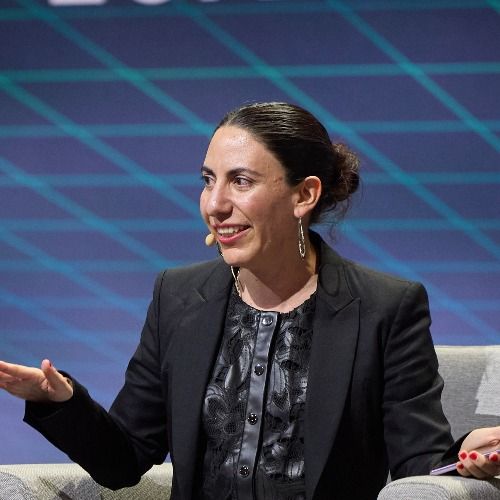
My guest today is Christian Lehringer, CEO at Copecto. Copecto’s innovative product is The TIMBERCARD. The world’s first plastic-free wood payment card that can be used like any conventional banking card. It is fully biodegradable, except for the chip, antenna and magnetic stripe. and when exposed to the soil, it decomposes much quicker than conventional plastic cards
We talk about the 6 billion per annum plastic cards problem and how the Timbercard is part of the solution. He talks to us about the innovative processes behind the card and the challenges in building such an innovative product, including the controversial topic of deforestation. Let’s go and create a world where we have a wood bank card in everybody’s wallet!
If you enjoy this episode it would mean the world if you subscribe and give it a follow so that we can have more impact
Let’s dive into it!
👉 You can find Christian here
- LinkedIn: https://www.linkedin.com/in/christian-lehringer-745623137/
- LinkedIn Copecto: https://www.linkedin.com/company/copecto-gmbh/
- Website: https://timbercard.com/
👉 And you can find Monica here:
- LinkedIn: https://www.linkedin.com/in/monicamillares/
- YouTube: https://www.youtube.com/@moni_millares
- TikTok: https://www.tiktok.com/@moni_millares
- Website: https://moni-millares.mystrikingly.com/
If you enjoy this pod, please follow and leave a 5 star rating on Spotify and a review on Apple podcasts
In this Purpose Driven FinTech episode we cover:
(0:00:00) The problem of plastic cards in the payment industry
(0:03:08) Introduction to Copecto and the Timber card
(0:07:06) Definition of success and building long-term relationships
(0:13:03) Purpose of using wood as a material in Copecto's products
(0:21:02) Customers demanding sustainable products in financial services
(0:22:55) Impact of plastic card waste on the environment
(0:24:19) Size of the plastic card waste problem
(0:25:55) Biodegradable components and decomposition process of Copecto card
(0:27:07) Laser engraving and personalization options for Copecto card
(0:29:17) Contactless engraving and scheme logos on Copecto card
(0:32:18) Challenges in manufacturing and selling the product
(0:40:41) Leadership style and team approach
(0:43:37) Desire for a more balanced approach in the fintech industry
SEARCH QUESTIONS
- What is the environmental impact of plastic payment cards?
- How many plastic cards are produced annually?
- What is a biodegradable payment card?
- How does the TIMBERCARD wooden card work?
- What is sustainable card manufacturing?
- How to reduce plastic waste in banking cards?
- What are the challenges of wooden payment cards?
- How is wood densified for payment cards?
- What is the future of sustainable payment cards?
- How to make eco-friendly banking cards?
- What are the alternatives to plastic payment cards?
- How do wooden cards meet payment industry standards?
- What is the carbon footprint of payment cards?
- How to create environmentally friendly FinTech products?
- What materials can replace plastic in cards?
- How does regional wood sourcing work for cards?
- What are the certification requirements for wooden cards?
- How to balance profit and sustainability in business?
- What is the innovation process for sustainable products?
- How to build partnerships for green FinTech solutions?
—
Production and marketing by Monica Millares. For inquiries about coaching, collabs, sponsoring the podcast or creating or editing your podcast email Monica at fintechwithmoni@gmail.com
Disclaimer: This episode does not constitute professional nor financial advice and does not represent the opinion nor views of my current, past or future employers. The guest has agreed to record and release our conversation for the use of this podcast and promotion in social media.
Transcript
Christian Lehringer (Copecto): Hello, Monica. Likewise. It's a pleasure to be here and to be your guest and looking forward to a nice exchange of information.
e like you and I met in money:Something different in your, badge and you had these wooden cards. And I was like, what is that? And basically that's how we met. And you were like, Oh yeah. So basically we create these wood cards. And in that moment I was hooked and that's it. And I was like, Hey, we need you in the podcast. So really looking forward to know more about you and to know more about [00:01:00] your vision.
To know more about the good card and yeah, to learn about it.
Christian Lehringer (Copecto): Yeah, thanks. Yes. I also recall that and encounter as a real pleasant one. It was really nice. We were all in a really relaxed mood and the fair was gone. And so everybody was taking care of himself. And in fact, yes, it was just fun to to, showcase you that card.
d they get it in their hands [:Immediate effect of a real nice touch and feel experience. So you can really look into their eyes and see their glance and say, Hey, wow, I cannot believe this is this is just wood and no plastic inside and no plastic coating. And. This is a payment card. True. Yeah. So it matches the international paying system requirements.
And I can only say, yes, in fact, that is true. And we are excited to hand it out to you. And the people say, okay, thank you. Can I keep it? And I will get back to you. And this is a real strong motivation to to, go on and to now. Yeah. Enter the market with this new product. It's
Monica Millares: amazing. And I can't wait to hear everything about it before we go into the converse full conversation.
you are more like Christian [:Christian Lehringer (Copecto): My best productivity habit is to switch off anything that disturbs me or that can disturb me. So really taking the time to focus on what is ahead next and As we are all living in a daily working routine where every time, every second something pops up, like I'm attending at least three chat services.
I have my emails. I have two email accounts at the moment, which I have to keep an eye. And then there are those written lists with tasks that you put yourself in the morning and in the evening, you always notice. There's only two or three marks behind a number of 10.
Christian Lehringer (Copecto): I think at the time where I feel, okay, this is the clear priority and I have to deliver this by then.
y because then I can really, [:Monica Millares: And what is your definition of success?
Christian Lehringer (Copecto): My definition of success, the definition is of my personal success is to have a good feeling in what I'm selling and what I'm telling and what I'm doing.
And if this on top is pleasant to my counterpart to the other side, so either I deliver. A good product or I deliver a good mood or a good feeling. We have good conversation. We have a common ground and we separate with both sides a good feeling of agreement. Then I think it's a good success because.
wealth well feeling balance, [:Monica Millares: Cool. And how did you go about it? What's your secret to being successful?
Christian Lehringer (Copecto): I personally try to be as authentic as possible. So I'm a pretty, let's say, emotional and gut driven person. I, try to not to hide too much things from myself against the other one. And, yes, I think this is appreciated and the openness and at least the feeling, which I hope to create that I'm not playing any hidden games is something that may is one of my successes.
re just being hidden agendas [:Christian Lehringer (Copecto): yeah. Of course, sometimes you have to do to play tactics. Of course, if you want to achieve something, you sometimes the best. Example is of course, price negotiations.
It's, always, you are entering like into a bazaar and of course you have to sometimes put on a poker face or something, but in the end if, you do it on a calculable way so that the other person knows more or less, what kind of person is sitting in front of her or to him, then I think it's something which contributes to, as I said, a long term relationship.
Yeah.
azing. So you like studying, [:Christian Lehringer (Copecto): Oh, my favorite book, in fact, Oh, wow, this is a difficult questions. I honestly, I haven't read a book since quite a while because I'm very busy family job. So in the evening, reading a book and most often with after half a page, because then my eyes shut down. But in fact I like biographies.
successful, who really have [:Really well know where they are standing. And this is also what drives me. Yes, I might be a PhD and I might something be relatively successful with my current career, but I very well know where my roots are and where I'm really. Settled and I think this is always important that you keep this inside and it happens really easily that you get distracted from it.
You have many business trips, you have many new persons like clapping your shoulder and pulling you this or that way. But if you have some really solid ground and this is my family, then yes, go and center. Yes, you're going center and then you can also perform better.
Monica Millares: Awesome. Great advice for everyone.
Christian Lehringer (Copecto): No, no advice. Just telling about my own experience.
Monica Millares: [:FinTech,
Christian Lehringer (Copecto): the role of purpose. So you mean like a purpose driven action, which I, try to do. So yeah, as you said, I'm not only a PhD in timber, so I'm a natural born wood lover. From my childhood on, I was always doing something with wood in the workshop of my father.
was interesting at that time [:And when I look back to that career, I think it, it was always wood as a purpose, wood, which is in the center of my Activity, because I truly believe that this material is a real fascinating one. It regrows just by photosynthesis. So you don't have to put any human energy into that material, be it for using it in a timber building or For in a bank card or whatever, and it's a biodegradable material.
It does not [:positive material. It feels good. It smells nice. You have a big variety of different wood species. Everything, every wood species is a little bit different than the other one. And this is my, purpose. And now bringing this material into something where Nobody ever thought before it would really work and as SwissWoodSolutions and DegenexSolutions, Copecto, Raiffeisen, all those companies which have worked in the past years on this project now have really created something new, a strong symbol that not [00:12:00] only a banking card, which has ever since been made out of plastic, can be really, let's say, replaced by a material biodegradable, but there are many other Articles in our daily lives, which can be transformed into something more sustainable.
And this is my, let's say, purpose.
Monica Millares: I can, see that in your eyes and how you speak. It's like you really mean it, which I thought that, how, yeah, it's like, how did you, Can you tell us about Copecto? Like, how did you go about? Hey, let's create this card. How did the idea come up?
cart was born already in mid:And so it's just, it's a densification procedure. However, it's so stable that you don't have any springback effect and that the material. It's really solid and really scratch resistant and so on. And this material was originally taken for the use in violins as fingerboards as a replacement for tropical ebony wood, which is a, I would say a problem that you cannot overuse the tropical forests.
c industry is pretty open to [:And they approached us the next day and called, Hey, what you showed there with this solid wood, can you also do this with a banking card? And we said, not we, I was not there in this company, but my colleagues said, okay, yes let's take that challenge and let's. Try to do the same, what we do here with solid wood, with veneers, so very thin sliced solid wood, and it showed that it works.
rototypes were made by end of:Yes, and so we partnered up with the German DigiNex solution. Which is the, central provider of cards and materials for the German co operative banks, so called Genossenschaftsbanken, and they found Swiss Wood Solutions, a pretty cool, innovative and sustainable company, so there was a major investment into our shares and on top, they said, come on, let's go for a partnership company, which is now Copecto.
And [:Since then we are a standalone company in Germany, a GmbH and in foundation still, so all the official administration work takes a while, but, I'm the designated CEO there and once the company has been fully founded, I will be in charge.
Monica Millares: Amazing. So who are your clients and which problem are you solving with this card?
he full value chain of those [:So we are addressing the big card manufacturers and card issuers, of the world where we really want to. Sell them this card body, be it like with an implanted with an implanted chip or the magnetic stripe or whatever. So that they can take it and put it into their global sales channels.
ting do marketing activities [:Why don't I get one? I want to sustainably could you please. Get into your supply chain and ask your card provider why he doesn't have it yet in his program or in his portfolio. So this is, we are trying to, be visible in different levels of the value chain.
Monica Millares: That is very smart because exactly if consumers start demanding the card that I think we are, because like when the customers are becoming more.
stomers will soon will start [:Christian Lehringer (Copecto): you're exactly and. Yeah just to, add, so what we observe is that, that like the big banks and also the big schemes, they all have sustainability programs launch.
e any virgin PVC anymore from:This is. All really good and we really support these activities and we are just offering [00:20:00] another alternative, which is really plastic free and not inverting anything, which is on a, let's say, petrol or artificial starch basis, but it's really it's wood and paper in this card. And this is a, hitting the nail on its head.
It's something which really raises the interest of, let's say the, card business. And this is what, yeah, gives us quite some, I would say, back tire wind at the
Monica Millares: moment. Yes. Can you tell us about the size of the problem? So these cards, they look innocent. Yeah. Yeah. It not this one, the other cards, the plastic cards, they look like, Oh, it's just a plastic card.
ese waste created by plastic [:Christian Lehringer (Copecto): Yeah there are studies available on the Internet, and I could provide you some links there, where there are statistics that there are billions of tons of plastic waste that have been produced since the invention of plastic, and that about only the 80, no, about only 10 percent of these quantities are regularly recycled.
apers should have gone aware [:And of course, the quantity of plastic cards worldwide, about six Billion plastic cards in the payment industry are annually, provided, which equals about the weight of 150 Boeing 747. It's a big number. Yeah. So 150 Boeing 747 only of you. Banking cards made of mostly of plastic, however, if you compare this amount to, let's say, the packaging industry, food packaging, and so on, it's a relatively small amount, but this is, as I said, it's a strong symbol.
ier or later, so it will not [:Yes, as if you would rip off a branch from your tree and put it on the soil or in the soil, in the forest. This is pretty much what happens to this card. Of course, and this is clear. We have to always bring this. There is there is a magnetic stripe on the back. Still required regulatory mandatory.
percent is paper, wood, [:Biodegradable
Monica Millares: adhesive as well.
Christian Lehringer (Copecto): Yes, of course. Yes. You have to put a biodegradable adhesive that after a short while, the several layers of the card start to delaminate and open the surface for the attack of the microorganisms. In the end, you must expose the material to the microorganisms in the soil.
And this is bacteria and fungi, wood decaying fungi.
Monica Millares: That is cool. That is the type of conversations that we don't have in the office, right? Everybody's just Oh, cool. Yeah. We need to print the cards and how many cards and the card design. But very few people are thinking about yeah. And the biodegradable cards, because then basically we own well.
yers. But now you're saying, [:Christian Lehringer (Copecto): soil.
Yes. It's a natural fertilizer to your flower pot.
Monica Millares: It's yeah we'll just plant fertilizer.
Christian Lehringer (Copecto): By the way, also one, one of those reasons why we, try to really avoid any color printing on the car because the inks commonly used. Are inks, which are not biodegradable and there's no such material available.
ossible to laser engrave. QR [:Monica Millares: fine. Cool. So basically all the banks who start using these, all the fintechs issuers that start using these card, all of them could be the same color, e.
g. the good color. It's a personalized card as well, because there's no two equal cards because of the process. But then my logo. Could never be like the blue or the yellow or the white or the black or the red, it always be engraved.
Christian Lehringer (Copecto): Yes. This is what, this is our, let's say, first choice. Of course, if customers really want to have their logo or their, I don't know, security labels in.
in the end, it's also a nice [:And well, and. Make it in a different approach and this is something where you see the creativity starts working and people say, okay, we, we don't need to put color, we can take it out.
Monica Millares: Because you even have the contactless engraving here. It is cool.
Christian Lehringer (Copecto): Yes. Even that. Yeah.
Monica Millares: Even that. Like how about the Scheme logos?
at we have seen in the metal [:And so this is something ongoing discussions. We are in, conversation with the big schemes and we see flexibility and openness to further develop their requirements. And this is really a positive signal. Yes, it is.
Monica Millares: I love that. It's a whoop for the industry working together. That's a yeah.
Christian Lehringer (Copecto): Yeah.
of the cards, there are ISO [:characteristics of our wood car. For example, if you just take a small example, if you take a normal plastic car and you bend it over, This is so everybody can do it really easily with this card. And with this card, no, no way, there's no
Monica Millares: way it doesn't
Christian Lehringer (Copecto): bend. It is really a stiff card. However we did measurements here and there is a standard test where you have to achieve a deflection of 15 millimeters, for a cycle of, I don't know, 400 or a thousand cycles, whatever.
s now with a lot of host, it [:Are further developed towards this new product, of course, like it was done with the metal cards a few years ago. They also entered the market were very new and try to, bend over a metal card in this way. You will also have your, issues here.
Monica Millares: Yeah, definitely. What are the challenges?
What are the challenges that you have in creating this type of
Christian Lehringer (Copecto): product? Can you please repeat the connection was shortly disinterrupted?
Monica Millares: Yes. What are the challenges that you have when it comes to manufacturing the product or selling the product?
ristian Lehringer (Copecto): [:Have several, I wouldn't say, yeah it's no issues. It's challenges as, like the standards assembly process of the different sheets layers into, before it goes into the big lamination presses, it's pretty standard and the supply chain is available. You can get your foil with a magnet stripe, magnetic stripe already applied in the right pattern or you have your, I don't know, your antenna inlay.
ith a new substrate and say, [:Yeah it's, a relevant. Yeah, it's a smooth surface, but it's not as smooth as glossy as the plastic surface. So this is something where we have to talk to the. producers of the magnetic stripes. We have had a lot of conversations to suppliers of the inlays with the antenna, because as a standard product in the pavement industry, everything is done on, PET, PVC, polycarbonate, whatever.
ny only starts going into an [:So the business case, of course. Now is a relatively small case against the billions of cards from the plastic industry. So we have to convince companies and at this time, it was really helpful and we wouldn't be at this point of development. If we hadn't run into digging next solutions and the life I spoke about, because they were really convinced of this product and they were.
e, we were able to produce a [:And so by this. We are now creating more visibility. We are creating references. We are building up a little heritage. And, we are now trying to, of course, convince not only customers to go into more pilot projects, but also to convince the supply chain, the companies for those different components to adopt their materiality and bring it into our requirements.
It's a real new product. We are the only company currently offering this, so there's no other company able to produce it.
thing of added value for the [:And if you also want, we can do this out of wood in your region. North American producers or Malaysian producers, they don't have to go and take the material from Europe, but they can go into their own sustainably managed. Forests get the wood and then of course, with some cycles of technical optimization, woodcuts can be made out of that wood as well.
ness based in Asia or Latam, [:Christian Lehringer (Copecto): Yeah. Currently the cards are made out of Swiss wood or European wood.
So maple from really from the Swiss mountains. Yeah.
Monica Millares: I'm like, I'm going to keep this like really well,
Christian Lehringer (Copecto): almost like gold unique. And, but the idea behind is to really use the regional resources to really contribute to the value chain of the forestry and of the sawmills and of the veneer produces around the corner.
it around the globe to make, [:And so with our modification procedure, we can really At mechanical properties, physical properties, and also, let's say properties from the aesthetic appearance, which are outstanding. And once we go into international markets, we will of course, try to identify partner companies that we would provide the production license.
but, of course, if there are [:Let's see what we can do and. The earlier, the better.
Monica Millares: Yes. I love that. And you have a really good product as such. And like you said, it's a unique, no one else is doing this in the world, which is amazing. And it's sustainable. And even you thought about the, Hey, we manufacture currently this in Europe.
Swiss, Swiss good. But then if I were to fly these all the way to Brazil, then it's not sustainable anymore, or all the way to Singapore or Malaysia or Thailand. It's not stable. Sustainable anymore, but then it's, you even thought about the, okay, how can we manufacture this product regional with regional good.
, without amazing people and [:Christian Lehringer (Copecto): one? So I really try to provide the people the, let's say the.
the fascination about what they are doing. So I'm fascinated about what I do. So I try to really transport this into everybody working close to me and with me or under me. And, to really identify the, skills of the person is always important. So you always have to see, okay, what are the, let's say the potentials and the, let's say the boundaries of, the.
hen to, once you have really [:I have my quality requirements, of course, and I sometimes also time requirements, which is sometimes necessary. But to me, it does not matter when or how the people are working on their task. It's just that the Result in the end is matching to what we need to bring the business a step further. And the second thing is that I'm a strong believer of, let's say the team approach.
m or each organization needs [:And I think this, this kind of role model. Approach is, something which, yeah, maybe is something considered a positive [00:42:00] side for myself. But in the end, you should ask my colleagues and employees.
Monica Millares: What is it real to work with Christian?
Christian Lehringer (Copecto): Yes.
Monica Millares: Cool. It's been an amazing conversation before we go. If there was one thing that you could change in the FinTech industry, such that it would make the lives of customers, members of staff and shareholders better, what could it be?
imization of profit. This is [:And do I really have to push? Yeah, to squeeze the last droplet out of the lemon, or is it also sufficient if I only get three droplets out of that lemon and leave the rest to us. It's let's say, finding the right balance between. Of course, a [00:44:00] profit driven business that in the end, try to be a bit more cautious about the resources we all only have this also means.
Maybe I don't have to fly to a meeting, but I can take the train, even it takes two hours or three hours longer. But by this I can reduce my personal carbon footprint, for example. And, yes, always what I really try to balance out is this continuous way of further and further optimization.
It, I think it is not good for our, future. If everybody's only trying to optimize everything until the maximum, there must be some reasonable level where you say, okay, stop, that's enough. We all have sufficient, this is my, moment
ares: because you know what, [:And exactly exploit, exploit to get there. And what they're saying, it's
Christian Lehringer (Copecto): Yes. And I understand that motivation. We are working in a money business, of course. Money is really creating some kind of desire to get even more. This is, of course, I, there is a, let's say human reflects and always gaining more wealth.
Yes. Maybe a little bit less. Would help us all and it would still suffice to, to have a good living. Yeah. I'm pretty sure.
Monica Millares: Yes. [:I wish you. All the success that you and the Timber card want and deserve. If we were to find you and, Copecto and know more about the product, where
Christian Lehringer (Copecto): can we find you? You can find us on the internet visit, copecto. com or visit timbercard. com. We have a first landing page there, which of course still needs to be more engaged.
m traveling to the next money:And yeah, as wise, I'm available as, every businessman by mobile and email. And if you want to meet me in person, you either come to Switzerland for a nice hiking trip or a swim in the Lake Lucerne or in Germany at the location of digging neck solutions in, Wiesbaden, which is close to Frankfurt.
Monica Millares: That's amazing. Christian, it's been a pleasure. Thank you, everyone. See you next week.
Christian Lehringer (Copecto): Ciao. Ciao. Thank you very much to you. And yeah, looking forward to meeting again. Bye.
Monica Millares: Bye. Bye. Thank you.